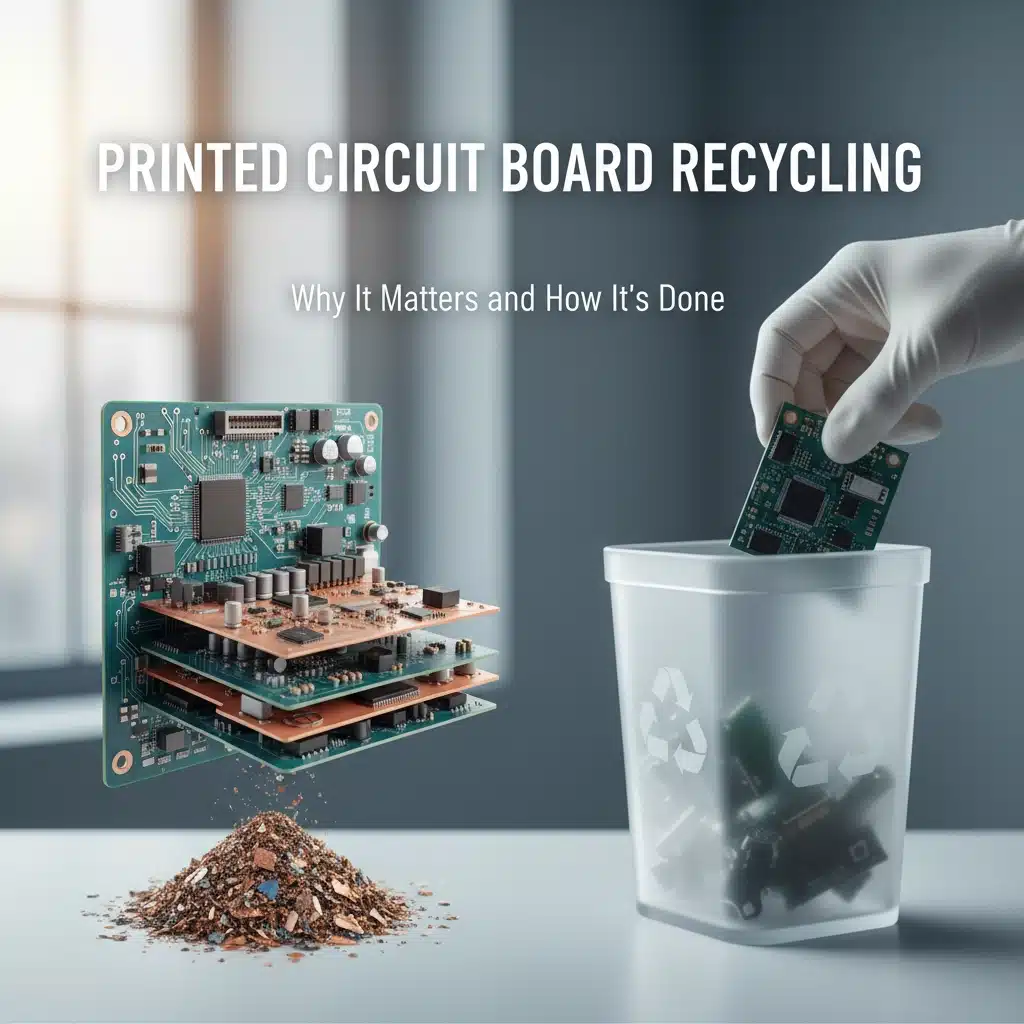
Printed Circuit Board Recycling
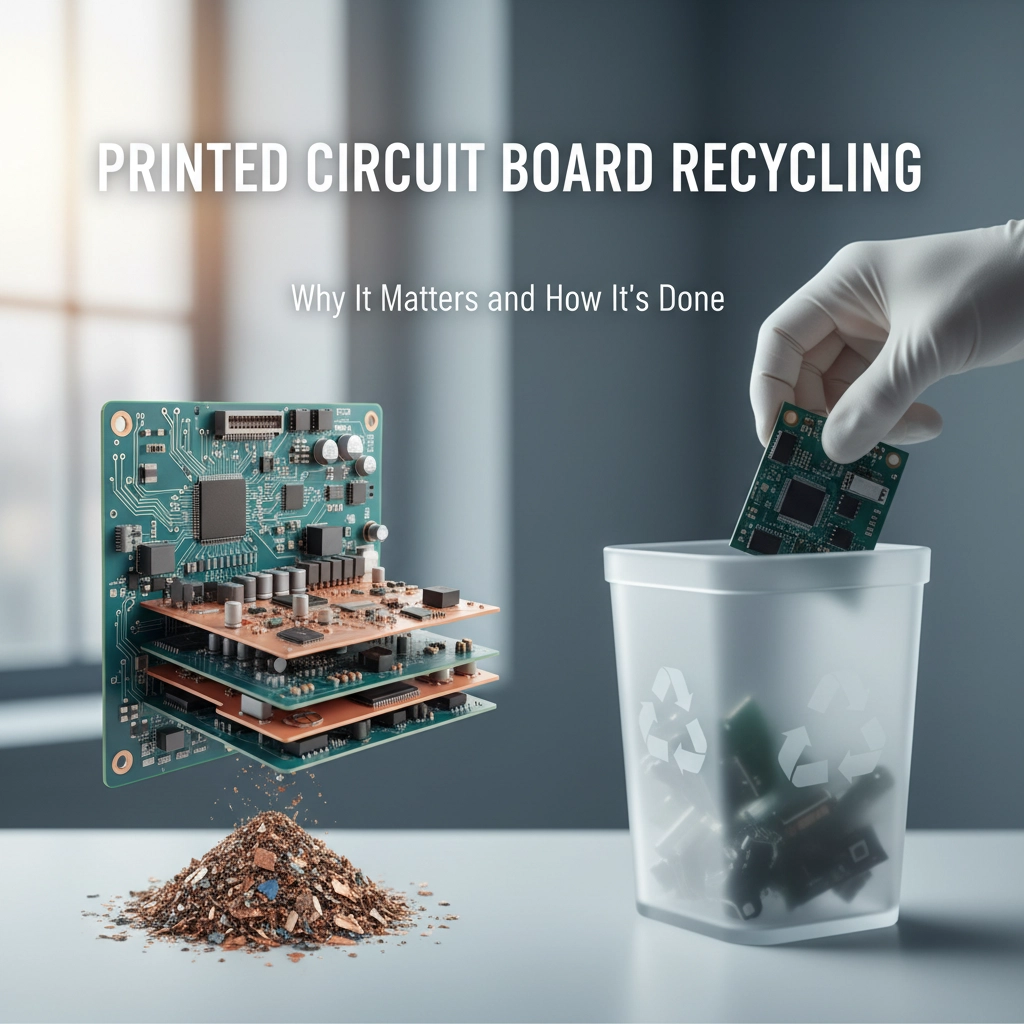
Printed circuit boards (PCBs) are the green, flat components you see inside virtually every electronic device: from smartphones and laptops to washing machines and industrial equipment. These boards contain valuable materials like copper, gold, and silver, but also potentially harmful substances that require proper disposal. For Northamptonshire businesses dealing with electronic waste, understanding PCB recycling isn’t just about compliance: it’s about recovering value while protecting the environment.
What Are Printed Circuit Boards?
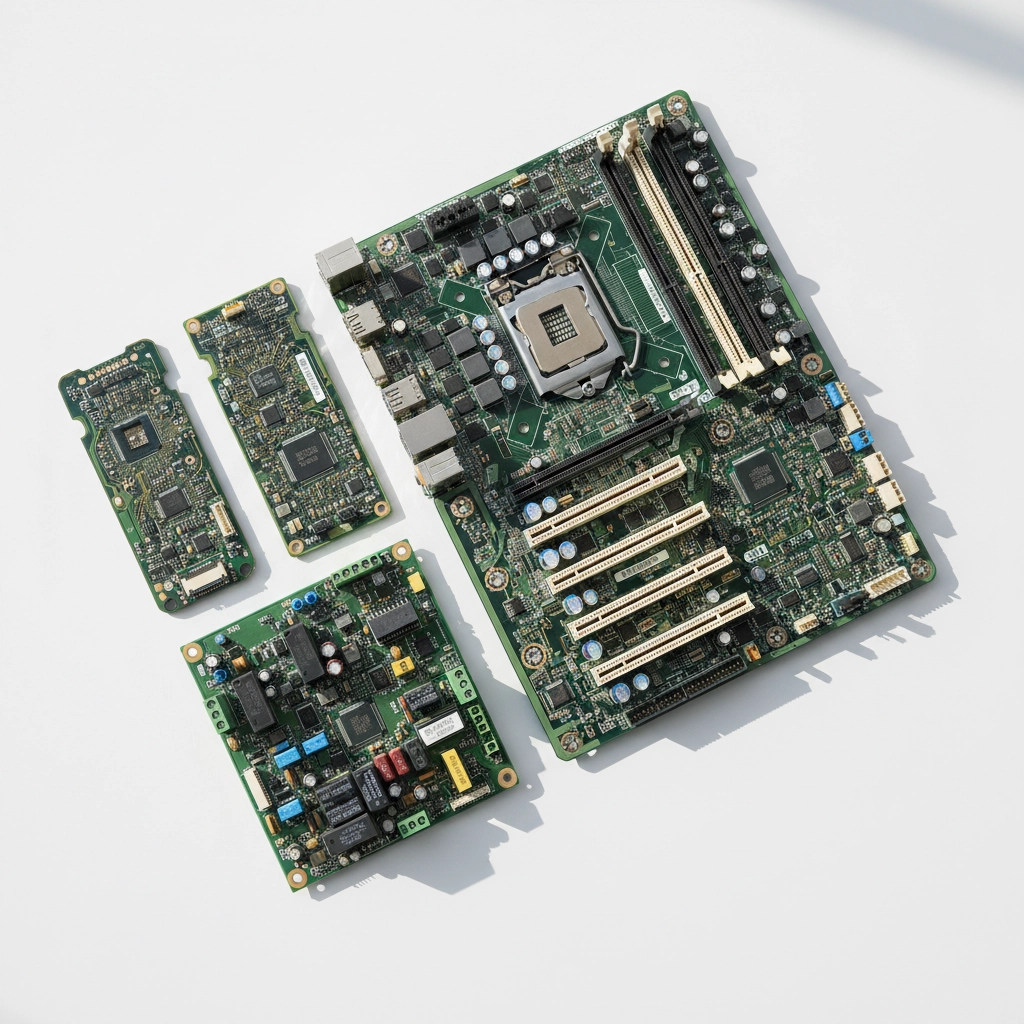
PCBs serve as the foundation for electronic components in devices. They consist of approximately 30% metallic materials (primarily copper) and 70% non-metallic materials including resins, plastics, and fibreglass. The metallic portion contains precious metals that make PCBs particularly valuable for recycling, while the non-metallic components require careful handling to prevent environmental contamination.
You’ll find PCBs in everything from computer motherboards and mobile phone circuits to the control boards in commercial kitchen equipment and office printers. As electronic devices reach end-of-life, these boards accumulate in significant quantities, creating both an environmental challenge and a resource recovery opportunity.
Why PCB Recycling Matters for Your Business
Environmental Protection
PCB recycling significantly reduces the volume of electronics sent to landfills, preventing the release of toxins that accumulate over time. When electronic waste sits in landfills, harmful substances leach into soil and groundwater, contaminating local ecosystems. By recycling PCBs, you keep these hazardous materials out of the environment while ensuring compliance with WEEE regulations.
The environmental impact extends beyond waste diversion. Proper PCB recycling reduces the need for mining raw materials, decreasing the environmental footprint of new electronics manufacturing. This conservation approach aligns with corporate sustainability goals that many Northamptonshire businesses are adopting.
Economic Benefits
PCB recycling delivers tangible economic advantages. The process conserves natural resources that would otherwise require energy-intensive mining or production, cutting down manufacturing costs and energy consumption across the electronics industry. For your business, this translates to potential cost recovery through material reclamation.
Recycling creates employment opportunities within the local economy. Specialised recycling companies require skilled workers to manage collection, sorting, dismantling, and processing operations. This job creation stimulates economic activity in Northamptonshire while building expertise in sustainable waste management.
Regulatory Compliance
WEEE regulations require proper disposal of electronic equipment containing PCBs. Non-compliance can result in significant fines and reputational damage. Working with certified recycling companies ensures your business meets legal obligations while maintaining audit trails for regulatory reporting.
The PCB Recycling Process: Step by Step
Collection and Initial Sorting
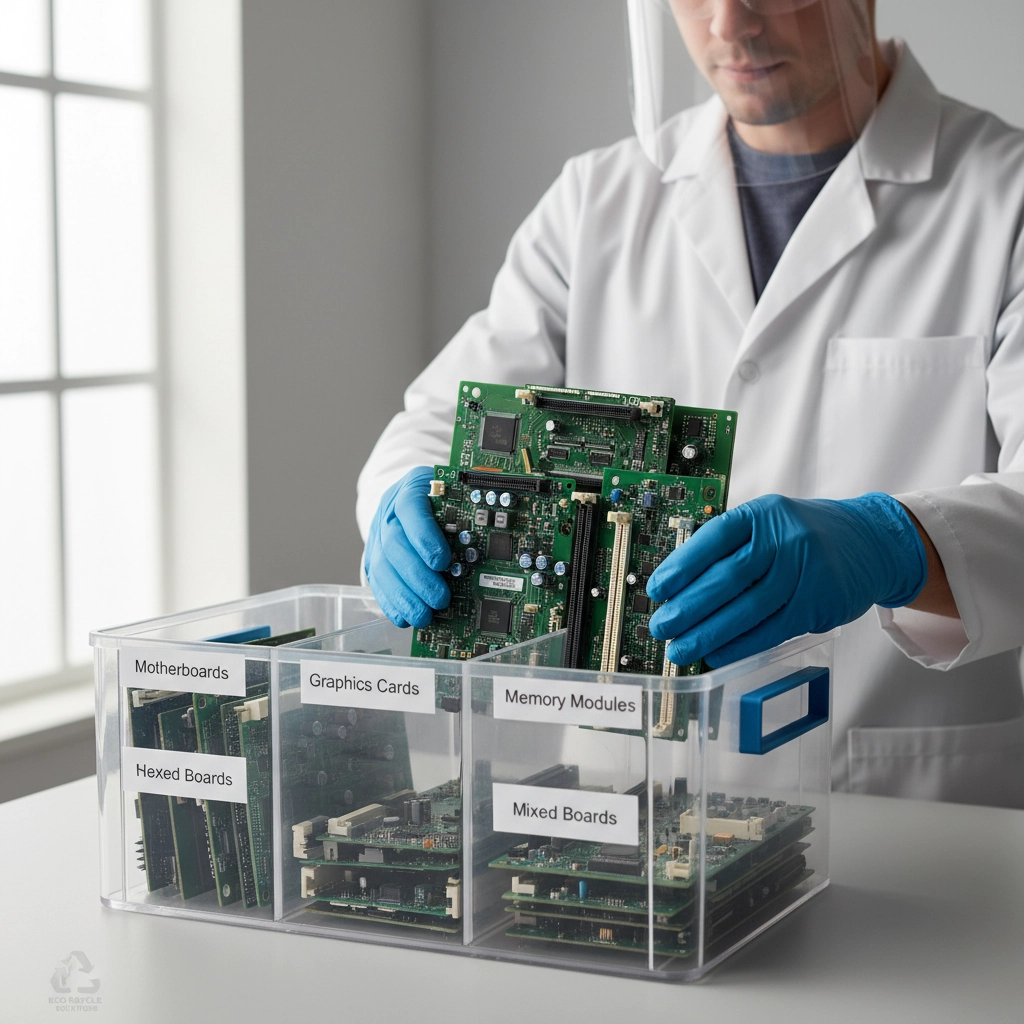
The recycling process begins with systematic collection and sorting. PCBs are gathered from various sources and categorised based on their type, size, and material composition. This initial sorting ensures optimal processing efficiency and material recovery rates.
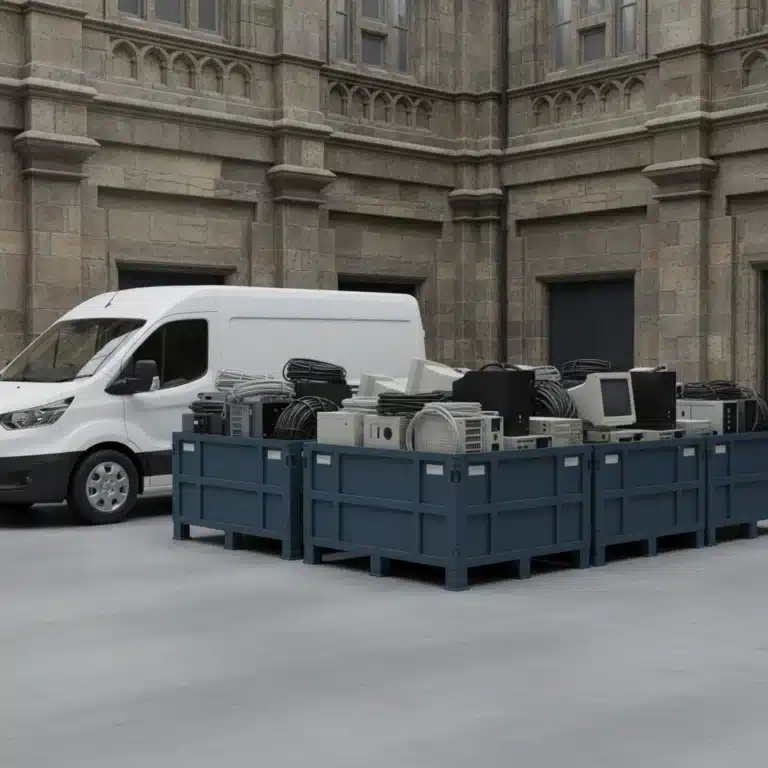
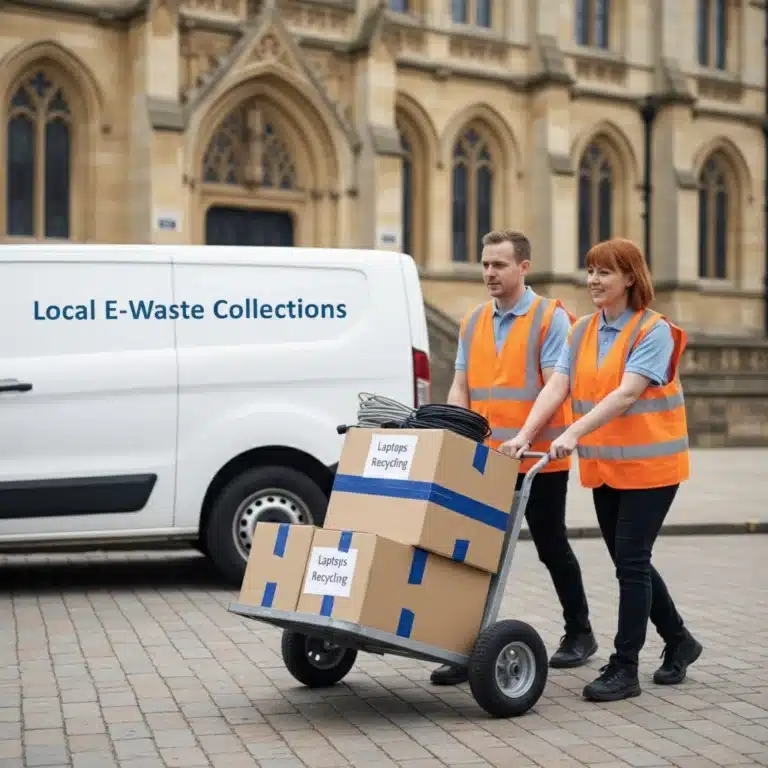
Professional recycling services handle the logistics of collection, providing businesses with secure containers and scheduled pickup services. This approach minimises disruption to your operations while ensuring proper chain-of-custody documentation.
Physical Size Reduction
Before materials can be separated, PCBs undergo physical size reduction through specialised cutting equipment. This process breaks boards into smaller, manageable pieces while loosening attached components. Size reduction improves separation efficiency and prepares materials for the next processing stages.
The cutting process uses precision equipment to avoid damaging valuable components that can be refurbished or reused. This careful approach maximises material recovery while maintaining component integrity where possible.
Component Removal and Separation
Component removal represents a critical stage where valuable parts are extracted from circuit boards. Technicians use drilling and sorting techniques to remove capacitors, processors, memory modules, resistors, and other electronic components. These components often retain value for refurbishment or parts recovery.
Magnetic separators then distinguish between ferromagnetic materials and non-ferrous metals, enabling efficient material classification. This separation process isolates different material types for specialised processing methods.
Material Recovery Methods
The industry employs three primary processing methods, each suited to different material types and recovery goals:
Hydrometallurgy uses aqueous solutions and controlled chemical processes to dissolve and separate metals from shredded PCB material. This method provides precise control over material recovery and produces high-purity outputs suitable for manufacturing applications.
Pyrometallurgy applies controlled high-temperature heating to recover metals while processing non-metallic components. Modern pyrometallurgical facilities include sophisticated emission control systems to manage any gases produced during processing.
Electrochemical Processing employs specialised equipment for material separation and recovery through electrical processes. This method offers excellent precision for precious metal recovery and produces materials suitable for direct manufacturing use.
Advanced Separation Technology
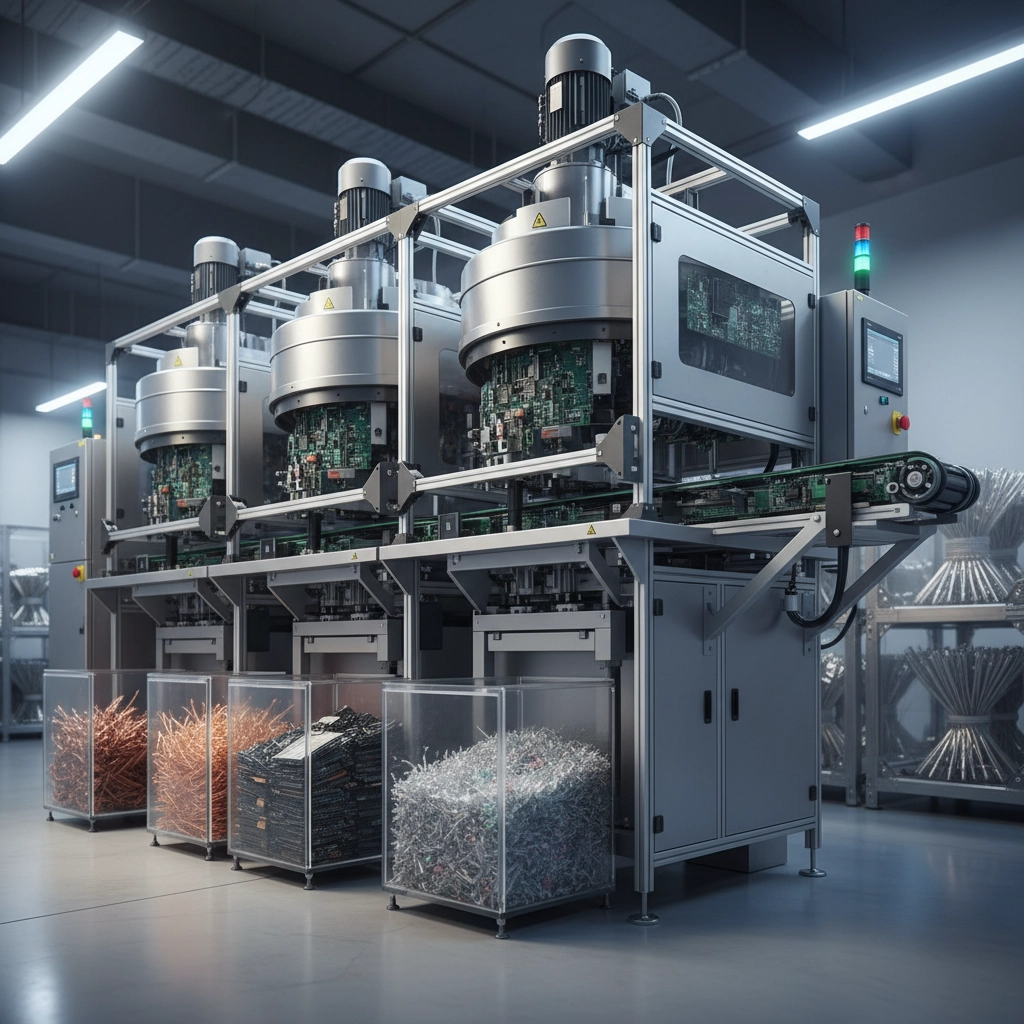
Modern PCB recycling facilities utilise fully automated processing systems that maximise efficiency and material recovery. These systems shred waste boards to specific granule sizes, then employ multiple separation techniques:
- Airflow separation removes lightweight materials like plastics and fibres
- Electrostatic separation distinguishes between conductive and non-conductive materials
- Magnetic separation isolates ferrous metals from other materials
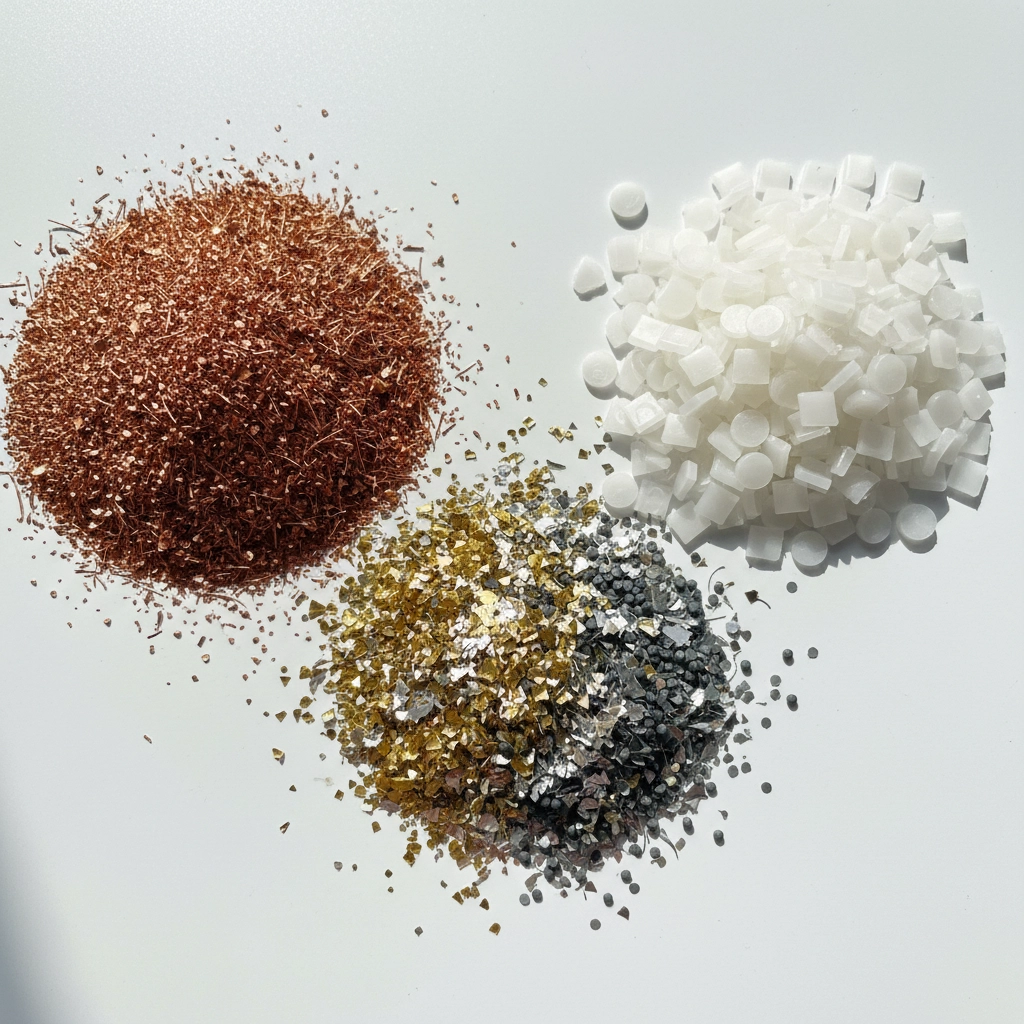
This multi-stage approach ensures precious metals (gold, silver, copper) and other valuable materials are collected separately for optimal processing and value recovery.
Quality Control and Purification
Recovered materials undergo quality control testing to verify purity levels and composition. Advanced facilities can achieve remarkable precision: for example, extracting neodymium from ceramic capacitors and refining it to 99.6% purity through controlled chemical processing.
This quality assurance ensures recovered materials meet manufacturing specifications for new electronics production, closing the circular economy loop effectively.
PCB Recycling in Northamptonshire
Local businesses benefit from specialised e-waste recycling services that understand regional compliance requirements and logistical challenges. Northamptonshire E-Waste and Electrical Recycling provides comprehensive PCB recycling services designed for business needs, from single-device disposal to large-scale equipment decommissioning.
Our approach emphasises security throughout the process. We provide secure collection containers, maintain detailed custody records, and ensure complete material destruction where required. This comprehensive service addresses both environmental responsibility and business security concerns.
Certification and Compliance
Working with certified recycling providers ensures your business meets WEEE obligations while maintaining audit trails for regulatory reporting. Look for recycling companies that hold relevant certifications and can provide detailed processing reports showing how materials were handled and where they were ultimately processed.
Proper documentation protects your business from potential liability while demonstrating environmental stewardship to stakeholders and customers.
Future Innovations in PCB Recycling
Emerging technologies promise to improve PCB recycling efficiency and environmental impact. Vitrimer PCBs represent a breakthrough development: these boards can be recycled repeatedly without material degradation. The vitrimer technology allows boards to be processed using low-temperature solvents that preserve components while enabling complete material separation.
These innovations suggest a future where PCBs can undergo multiple recycling cycles, with damaged boards repaired rather than discarded, and materials continuously recycled into new products without quality loss.
Getting Started with PCB Recycling
For Northamptonshire businesses looking to implement proper PCB recycling, the process begins with identifying all electronic equipment containing circuit boards. This inventory should include computers, servers, telecommunications equipment, and industrial control systems.
Contact certified recycling providers to discuss your specific needs, including collection frequency, security requirements, and documentation needs. Professional recycling services can provide tailored solutions that fit your operational requirements while ensuring complete compliance with environmental regulations.
Implementing PCB recycling demonstrates environmental leadership while recovering value from obsolete equipment. The process protects your business from regulatory risks while contributing to sustainable resource management in your community.
For comprehensive e-waste recycling services including PCB processing, contact our team to discuss your specific requirements and arrange a consultation.