Fridges, Microwaves, And Big Appliances: How To Recycle Them Legally And Safely
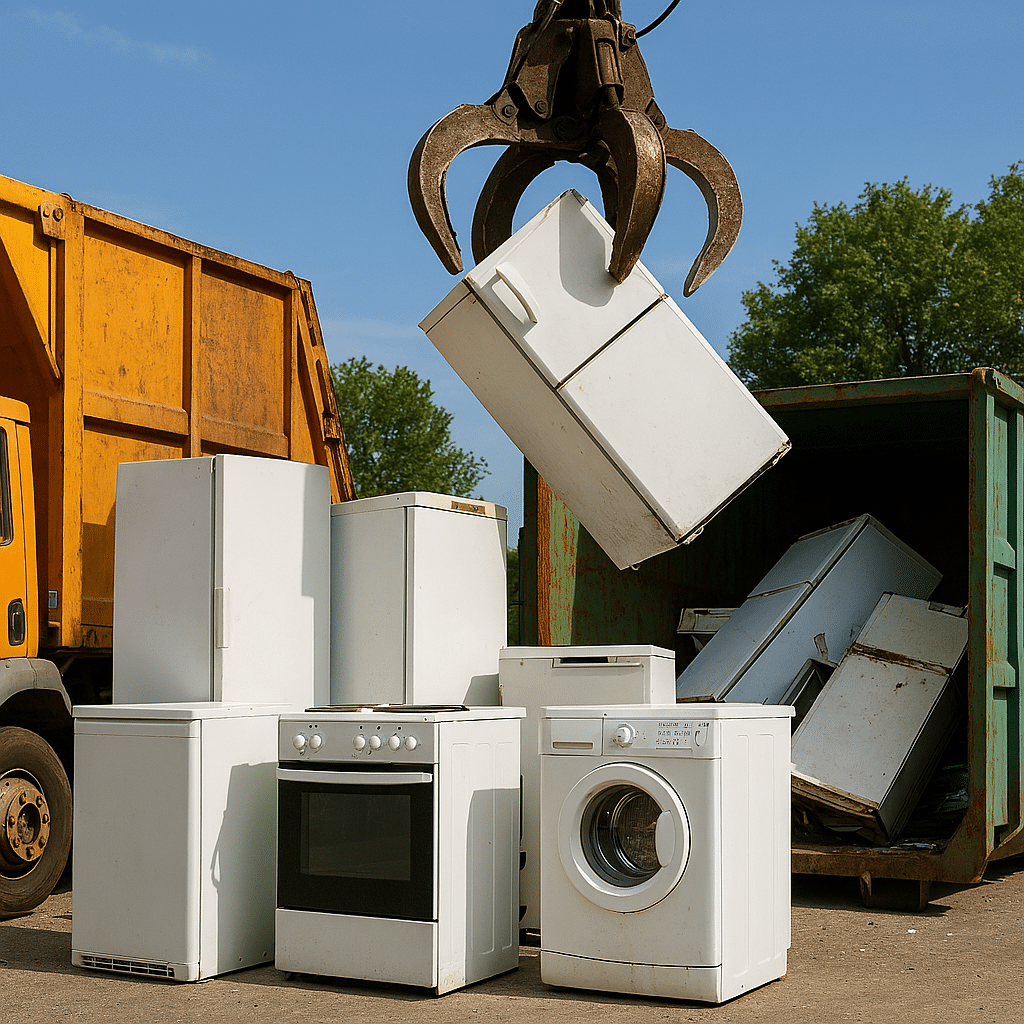
Large electricals are heavy, complex, and often hazardous if handled the wrong way. Fridges and freezers contain refrigerants, some older units still carry F-gases. Microwaves hold high-voltage capacitors. TVs and some monitors can contain mercury lamps or other hazardous parts. None of these belong in your general waste. If you are in Northamptonshire or nearby counties within 50 miles, this guide explains the safe, legal routes in the UK and how we help households and businesses route these items correctly, even where we do not collect them directly.
Why big appliances are not general waste
Fridges and freezers: Older appliances may contain ozone-depleting or climate-harming refrigerants. Compressors and oils are hazardous, and foams can release gases if damaged. Microwaves: The high-voltage capacitor can retain charge long after unplugging, which presents an electric shock risk. Microwaves also include circuit boards and mixed materials that need specialist treatment. TVs and certain monitors: Backlights in some older flat screens use mercury-containing lamps. Larger units have substantial plastics, glass, and circuit boards that must be dismantled carefully. Smart features and data: Connected TVs, smart fridges, and Wi‑Fi enabled appliances can store personal data such as contact details, Wi‑Fi credentials, and streaming logins. They require secure data handling before reuse or recycling.
Placing any of these items in your bin or fly-tipping them risks environmental damage, injury, and legal penalties.
Is a microwave WEEE waste?
Yes. A microwave is classed as WEEE, which stands for Waste Electrical and Electronic Equipment. It must be recycled via a compliant route. Do not put a microwave in your wheelie bin or skip. Use retailer take-back, a council household waste recycling centre (HWRC), or a licensed collector.
Is it illegal to throw away electronics in the UK?
It is an offence to dispose of WEEE in ways that breach environmental regulations. Putting electricals in general waste or dumping them can lead to fines. The safe, lawful routes are retail take-back, council HWRCs or bulky waste services, charity reuse where appropriate, and licensed waste carriers with proper paperwork. Businesses have additional duties under the WEEE Regulations and Duty of Care to use licensed routes, store waste safely, and keep records.
Legal routes for large WEEE in the UK
Retailer take-back: When you buy a like-for-like replacement, many retailers offer take-back or collection of your old unit. Some charge a fee. Check whether they will safely remove doors from fridges or freezers before transport.
Council services: Local councils operate HWRCs and often provide paid bulky-waste collections. Check your council’s policy for fridges, freezers, and large TVs, and whether they require the item to be outside at kerbside.
Licensed collectors: For households and businesses, a licensed waste carrier can collect, handle hazardous parts correctly, and provide documentation. Look for an Environment Agency registration and ask for Waste Transfer Notes, and if needed, consignment notes for hazardous components.
How to dispose of electronic waste safely
Unplug and isolate: Disconnect appliances at the mains. For fridges, remove food and defrost if requested by your collector.
Keep batteries separate: Remove loose batteries and place them in a small tub or clear bag. Tape lithium terminals to reduce short-circuit risk.
Do not dismantle: Avoid removing compressors, capacitors, or other components yourself. This can be dangerous and may breach regulations.
Protect data on smart devices: Perform a factory reset on smart fridges or connected TVs if you can. If unsure, ask your collector to handle data sanitisation.
Use a compliant route: Choose retailer take-back, council services, or a licensed carrier. Always request documentation for business waste.
Who takes away old electrical items?
In Northamptonshire and within roughly 50 miles of Northampton, you can use:
Your local council’s HWRC or bulky-waste service.
Retailer take-back when buying a replacement.
Northamptonshire E‑waste and Electrical Recycling for household and business pickups of small electricals and IT equipment, including evenings and weekends, subject to availability.
We work alongside local options for large appliances by focusing on smaller electricals and IT, and by signposting you to suitable routes for fridges, freezers, microwaves, and TVs where needed. Free collection may be available for 10 or more qualifying items of the types we accept, subject to confirmation. Smaller or specialist loads can be quoted.
How to dispose of a refrigerator in Buckinghamshire
Check retailer options: If you are replacing your fridge, ask the retailer to collect the old one when delivering the new model. Confirm safe handling of doors, oils, and refrigerants. Council services: Buckinghamshire residents can use council HWRCs or book a bulky-waste collection. Verify booking times and any fees.
Licensed collection: Book a compliant pickup with a provider that accepts large appliances. Many licensed waste carriers and specialist fridge recyclers operate within about 50 miles of Northampton and across Buckinghamshire. They will handle lifting, safe transit, and compliant routing to an Approved Authorised Treatment Facility where required.
Tip: Keep the unit upright for transport if possible, and do not remove the compressor. If the fridge is stored, keep it dry and secure. If there is a leak or strong chemical smell, isolate the unit and tell the collector.
Our compliant collection process for homes and businesses
Booking: Email or call with your item list, quantities, and preferred time window. We offer seven-day availability, including evenings and weekends where slots allow. Items should be grouped by type if possible. On the day: We log items at pickup and maintain a chain-of-custody through processing. For hazardous items or components, we raise consignment notes where required. Data handling: For smart appliances and other data-bearing equipment, we provide industry-standard data erasure where appropriate. Certificates of data erasure or destruction are available on request. Tell us what certification you need when booking.
Processing: Reuse is prioritised where safe. Non-reusable items are routed to licensed processors for material recovery, with a zero-landfill commitment on collected waste. Documentation: Waste Transfer Notes are provided as required. Businesses can request additional documentation to support audits and compliance.
Licensing details: Waste Carrier Licence CBDU516511; Environment Agency Registration EXP/CP3541YQ; registration ZC000314 referenced. If you need confirmation for procurement or insurance purposes, ask when you book.
Area notes for Northamptonshire and nearby counties
We serve Northamptonshire plus nearby counties within about 50 miles, including parts of Buckinghamshire, Bedfordshire, Warwickshire, Oxfordshire, Leicestershire, and Cambridgeshire. Capacity can be tight in peak periods, especially late December and early January. Book early for school holidays, office refits, or pre-Christmas upgrades. Free collection offers for 10+ qualifying items run during seasonal drives and may be capacity
limited.
Safety watchouts for specific items
Fridges and freezers: Avoid laying them flat if you can. If damaged or leaking, keep them outdoors under cover and inform your chosen collector before collection.
Microwaves: Do not open the casing. The capacitor can retain a dangerous charge. Store dry and off the floor.
TVs and certain monitors: Keep the screen intact, avoid pressure on the glass, and store upright. If the unit flickers or smells of burning, isolate it on a non-flammable surface and contact a suitable collector. Batteries and UPS units: If a battery is swollen or hot, do not charge it. Place it in a cool, non-flammable area and tell the collector before pickup.
Quick answers to your questions
Is a microwave WEEE waste? Yes, it is WEEE and must go through a proper recycling route.
Is it illegal to throw away electronics in the UK? You must use a compliant route. Dumping or putting electronics in general waste can be an offence.
How do I dispose of electronic waste safely? Unplug, keep batteries separate, avoid dismantling, reset smart features if you can, and use retailer take-back, council services, or a licensed collector. How do I dispose of a refrigerator in Buckinghamshire? Use retailer take-back, Buckinghamshire council services, or book a licensed collection with a provider that accepts large appliances. Who takes away old electrical items? Councils, retailers offering take-back, and licensed collectors. Northamptonshire E‑waste and Electrical Recycling focuses on small electricals and IT equipment for households and businesses.
Book a safe, compliant pickup
We provide secure, licensed collections for households, SMEs, retailers, schools, and charities, focusing on smaller electricals, IT equipment, and related items. Within 50 miles of Northampton, we can collect seven days a week with flexible scheduling. Request Waste Transfer Notes and, where relevant, certificates of data erasure or destruction. To book, email [email protected] or call +44 07756145492 with your item list and preferred times.
If you are planning a broader tech clear-out, our team also handles business-focused services such as IT equipment disposal with chain-of-custody and optional certification, and we can advise you on compliant routes for larger appliances that we do not collect.
For residents searching for trusted, local services, our e-waste collection supports Northamptonshire and surrounding areas and keeps harmful waste out of landfill, while guiding you to safe options for big appliances that fall outside our collection scope.