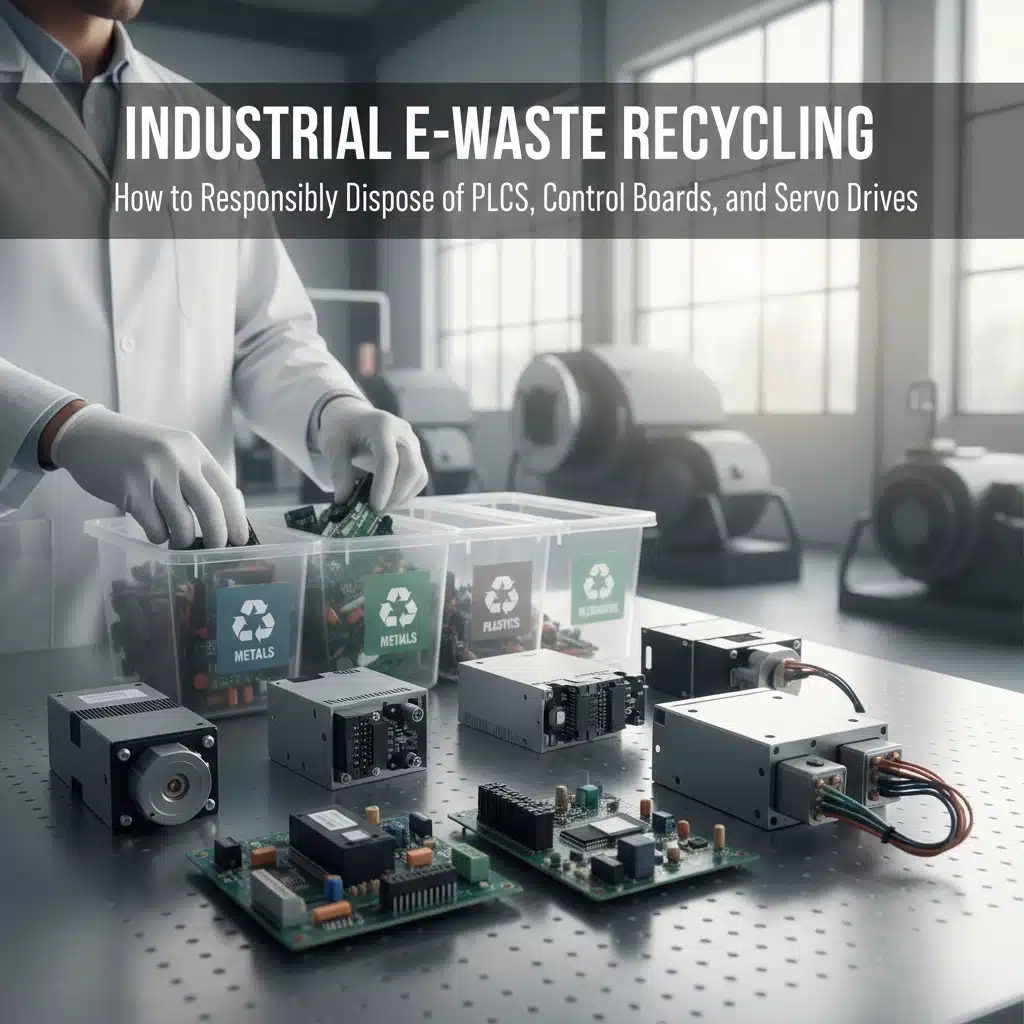
Industrial E-Waste Recycling: Responsible Disposal Factory Electronics

Manufacturing facilities across Northamptonshire generate substantial amounts of specialised electronic waste that requires proper handling. Unlike household electronics, industrial e-waste spans automation and power equipment used on the factory floor—everything from PLC racks and industrial PCs to motors, robotics, and large UPS systems. These assets contain valuable materials and hazardous substances and therefore demand expert recycling processes.
Industrial electronic equipment represents a significant portion of the e-waste stream, yet many businesses remain unclear about proper disposal methods. Understanding how to manage factory electronics—PLCs, control boards, servo and variable-speed drives, industrial computers and displays, old sensors and switches, electric motors, specialised cabling, robotics controllers, process instrumentation, and large UPS units—protects your business from regulatory violations while recovering valuable materials for reuse.
What Qualifies as Industrial E-Waste?
Industrial e-waste encompasses any electronic or electrical equipment used in manufacturing, automation, and plant operations. It extends far beyond office IT to include the electronics that keep production lines running.
Common examples include:
- Programmable Logic Controllers (PLCs) and I/O modules
- Control boards and printed circuit boards from machinery and panels
- Servo drives, variable frequency drives (VFDs), soft starters, robotics controllers and drives
- Industrial computers (IPCs), HMIs, and industrial displays/touchscreens
- Old sensors and switches (proximity, photoelectric, pressure, temperature, limit switches)
- Electric motors and gearmotors
- Large uninterruptible power supplies (UPS)
- Specialised wiring and cabling (shielded data cables, high-current power leads, multicore control harnesses)
- Networking and communications equipment (industrial switches, routers, fieldbus/protocol gateways)
- Process automation and instrumentation devices (DAQ modules, transmitters, analysers)
- Test and measurement devices, and other electronics common in factories and manufacturing environments
These items typically contain a mix of precious and base metals alongside hazardous substances (for example, lead solder on PCBs, electrolytic capacitors, mercury in legacy devices, and battery chemistries). Each category requires specific handling protocols to ensure safe material recovery and regulatory compliance.

Why Industrial E-Waste Requires Professional Handling
Industrial electronics contain nearly 20 types of non-ferrous metals and rare earth elements that make them valuable for material recovery. However, these same components include hazardous substances that can contaminate soil and groundwater if disposed of incorrectly.
Regulatory Compliance The Waste Electrical and Electronic Equipment (WEEE) Regulations require businesses to dispose of electronic equipment through approved recycling channels. Industrial facilities must maintain documentation proving proper disposal to avoid penalties and demonstrate environmental compliance.
Manufacturing businesses generating significant volumes of e-waste must register as WEEE producers and meet specific reporting requirements. Working with licensed waste recycling services in Northampton ensures your facility maintains compliance while focusing on core operations.
Environmental Protection Control boards and automation equipment contain toxic materials including hexavalent chromium, mercury, and polybrominated biphenyl flame retardants. These substances leach into soil and groundwater when disposed of in standard landfills, creating long-term environmental contamination.
Professional e-waste recycling prevents these materials from entering the environment while recovering valuable metals for reuse in new manufacturing processes.
Data Security Industrial control systems store proprietary programming, operational parameters, and process data that competitors could exploit. Proper data destruction ensures sensitive information cannot be recovered from disposed equipment.
The Industrial E-Waste Recycling Process
Professional recycling facilities follow systematic processes designed to safely extract valuable materials while neutralising hazardous components.
Initial Assessment and Collection Certified e-waste recyclers assess your industrial equipment to determine the most appropriate processing methods. This evaluation considers material composition, hazardous content, and data security requirements.
Collection services accommodate various business needs, from scheduled pickups for ongoing operations to comprehensive facility cleanouts during equipment upgrades. Many e waste recyclers offer flexible scheduling to minimise disruption to production activities.
Secure Data Destruction Before physical processing begins, all programmable devices undergo secure data destruction. This includes wiping memory modules, physically destroying storage components, and degaussing magnetic media to prevent data recovery.
Documentation certificates verify complete data destruction, providing audit trails for compliance reporting and internal security protocols.

Hazardous Material Removal Trained technicians manually remove hazardous components including batteries, capacitors, and mercury-containing devices. This careful separation prevents contamination of recyclable materials while ensuring proper disposal of toxic substances.
Hazardous materials receive treatment according to specific regulatory requirements, with tracking documentation maintained throughout the disposal process.
Mechanical Processing After hazard removal, equipment enters industrial shredding systems that reduce components to manageable sizes. Shredding parameters are adjusted based on material composition to optimise separation efficiency.
Circuit boards undergo specialised crushing to achieve particle sizes that maximise metal recovery. This mechanical processing breaks down complex assemblies into constituent materials for further separation.
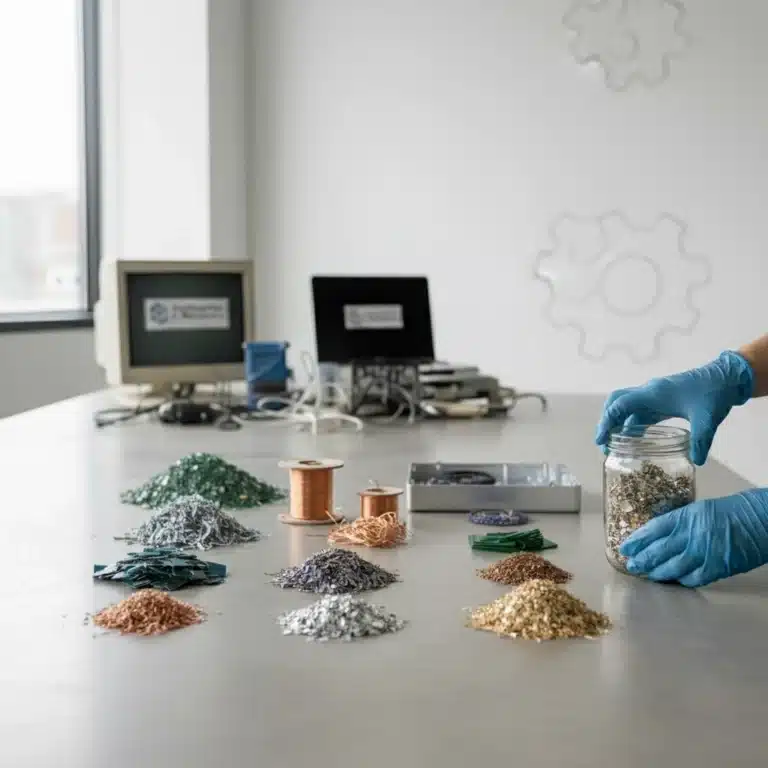
Advanced Material Separation Sophisticated sorting systems use magnetic separation, eddy current technology, infrared identification, and air classification to separate different material types. These automated processes achieve high purity levels essential for material reuse.
Ferrous metals are extracted first using powerful electromagnets. Non-ferrous metals including copper, aluminium, and precious metals are separated through eddy current separators. Plastic components are sorted by type using infrared identification systems.
Practical Steps for Manufacturing Businesses
Implementing effective industrial e-waste management requires systematic approaches that integrate with existing operations.
Establish Internal Tracking Systems Maintain detailed records of industrial electronics throughout their operational lifecycle. Track purchase dates, installation locations, maintenance history, and performance metrics to anticipate replacement needs.
Asset tracking enables proactive planning for equipment disposal, preventing accumulation of obsolete devices and ensuring timely recycling arrangements.
Partner with Certified Recycling Services Select recycling electronics near me services that hold appropriate environmental permits and maintain certification from recognised industry bodies. Verify that potential partners can handle your specific equipment types and provide necessary documentation.
Request facility tours to observe processing capabilities and security measures firsthand. Reputable recyclers welcome transparency and readily demonstrate their operations to potential business partners.
Develop Internal Procedures Create standard operating procedures for identifying, storing, and preparing industrial e-waste for collection. Train relevant personnel on proper handling techniques and documentation requirements.
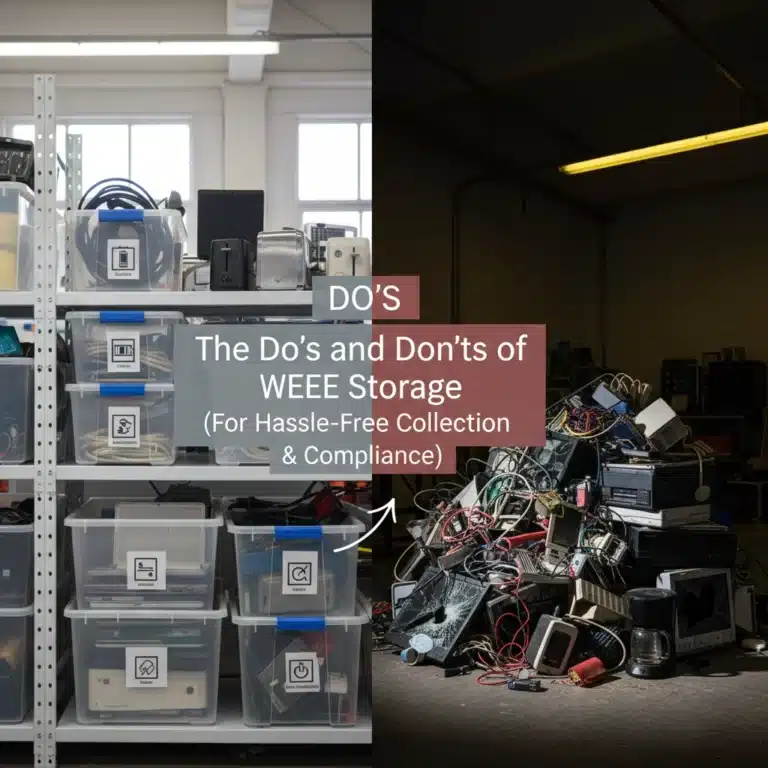
Establish secure storage areas for obsolete equipment awaiting collection, ensuring protection from weather, theft, and unauthorised access. Implement inventory controls to track all items scheduled for disposal.

Consider Refurbishment Opportunities Evaluate whether functional equipment can be refurbished, resold, or donated before recycling. Many industrial electronics retain significant value even when no longer suitable for original applications.
Working with specialised resellers or refurbishment services can recover value from obsolete equipment while extending operational lifecycles. Document all transactions to maintain compliance with asset disposal policies.
Working with Northamptonshire E-Waste Recycling Services
Your local recycling partner for secure, compliant disposal of factory electronics.
Service Flexibility We collect within a 50‑mile radius of Northampton and tailor pickups to your production schedule. Options include:
- Scheduled collections, one-off clearances, and emergency call-outs
- Evenings and weekends available to minimise disruption
- Free collection for 10+ qualifying items
- Container solutions for ongoing accumulation
Secure, Compliant Disposal and Documentation We operate with a zero-landfill waste guarantee and full compliance with WEEE Regulations 2013. Credentials and assurances:
- Environment Agency registered (T11 exempt) and licensed Waste Carrier
- ICO registered for data protection and secure data handling
- Secure data destruction for PLCs, IPCs, HMIs, drives, and storage media (certificates supplied)
- Waste Transfer Notes issued on collection; serial/asset capture available on request
You receive clear paperwork for audits and internal records, and status updates from collection through final processing.
Material Recovery Reporting We can report on recovered materials and diversion-from-landfill metrics to support your sustainability reporting and procurement decisions.
Next Steps for Your Business
A structured approach will keep your disposal secure and compliant.
- Take inventory: list equipment type, quantity, location, and any data-bearing components (PLCs/IPC storage, HMIs, drives).
- Segregate by type: separate batteries (including UPS cabinets), PCBs, motors, cabling, and general electronics. Store batteries upright in a cool, dry area.
- Prepare for collection: label pallets/containers, isolate any leaking or damaged batteries, and keep items under cover.
- Capture serials where needed: export configurations and remove any site identifiers from devices that will be recycled.
Arrange a compliant collection:
- Book with our team for a site assessment or direct pickup. We operate within a 50‑mile radius of Northampton.
- Free collection is available for 10+ qualifying items; we offer evening and weekend slots.
- On the day, we issue a Waste Transfer Note. After processing, you receive data destruction certificates and any agreed asset/serial reports.
For businesses across Northamptonshire seeking reliable industrial e-waste recycling solutions, our professional recycling services cover assessment, secure collection, certified processing, and documented data destruction.
We handle disposal in line with WEEE Regulations 2013 and data protection requirements, with a zero‑landfill commitment and clear privacy practices.