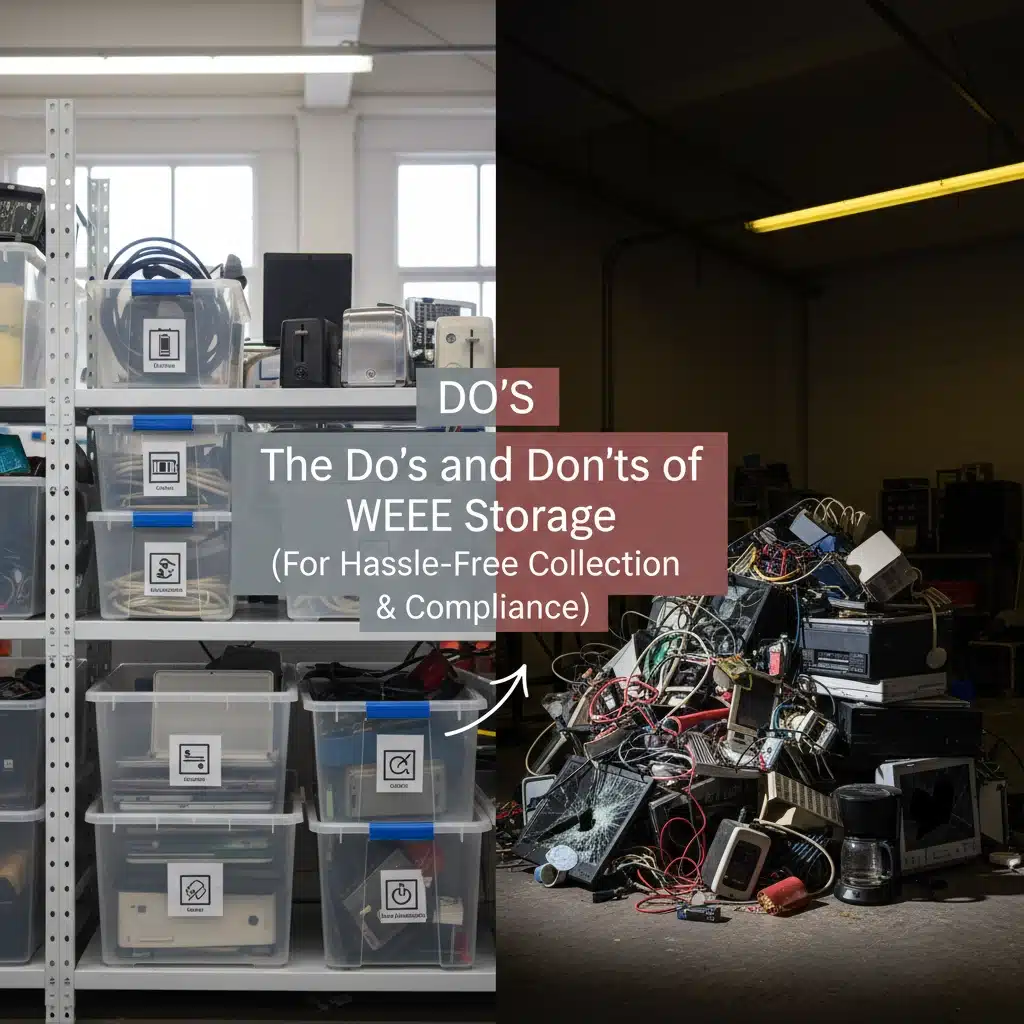
The Do’s and Don’ts of WEEE Storage
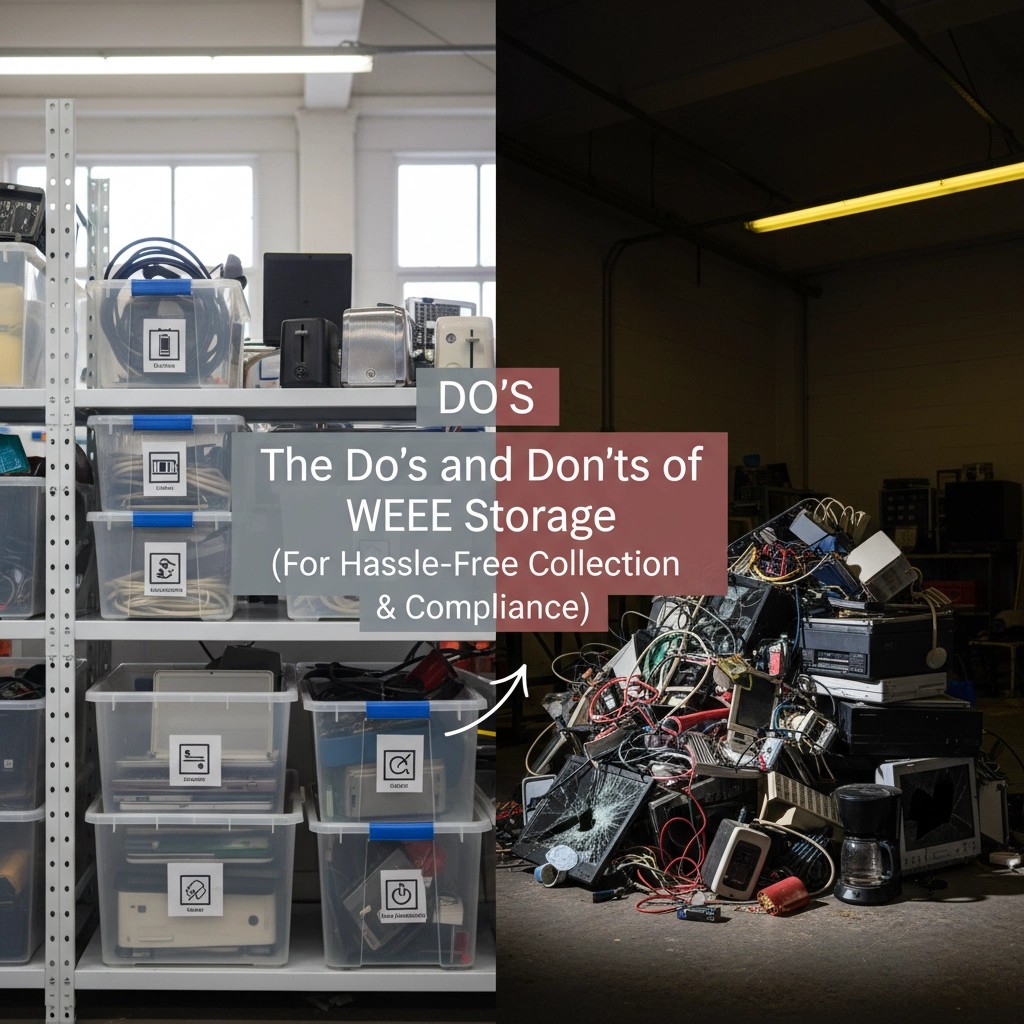
Getting WEEE storage right isn’t just about ticking compliance boxes: it’s about making your life easier when collection day comes around. Whether you’re a small Northampton business with the occasional broken printer or a larger operation dealing with regular IT refreshes, proper storage keeps you safe, legal, and ready for hassle-free pickup.
Let’s dive into what you should (and definitely shouldn’t) be doing with your electrical waste storage.
The Essential Do’s of WEEE Storage
Start with Proper Assessment and Segregation
Before you even think about storage containers, you need to know what you’re dealing with. Take stock of the types of electrical waste your business generates, how much you typically accumulate, and how often you need collections.
The key here is segregation from day one. Don’t just chuck everything into one big pile: separate your hazardous components immediately. Items like old batteries, fluorescent tubes, and anything with a capacitor need special handling. These contain nasty stuff like mercury and lead that can cause serious problems if they leak or break.
Keep hazardous and non-hazardous items completely separate. This isn’t just good practice: it’s legally required and makes the whole collection process smoother.
Choose the Right Containers for the Job
Your storage setup needs to match your waste volume and types. A small office might get away with sturdy plastic boxes for collecting smaller electronics, but if you’re regularly disposing of larger equipment, you’ll want wheelie bins or even pallet storage.
Whatever containers you choose, make sure they’re:
- Leak-proof and sturdy enough for the job
- Clearly labeled with contents
- Appropriate for the types of waste you’re storing

Pro tip: Many businesses use simple sticker systems to show what can and can’t go in each container. This prevents staff from accidentally mixing incompatible waste types.
Protect Everything from the Weather
This one’s non-negotiable for compliance: your WEEE must be stored on an impermeable surface with weatherproof covering. Water and electronics don’t mix, and when electrical waste gets wet, it becomes a bigger environmental hazard.
Indoor storage is your best bet if you have the space. If you need to store items outdoors, invest in proper weatherproof containers or covered areas with good tarping. Keep it dry, and you’ll avoid both compliance issues and the headache of dealing with corroded, leaking equipment.
Handle with Care: No Throwing Allowed
It might seem obvious, but you’d be surprised how often people just toss old equipment into storage containers. This is a big no-no, especially with fragile items like computer monitors, laptops, and printer toners.
Stack items carefully, avoid putting heavy equipment on top of delicate pieces, and always lower items into containers rather than dropping them. Broken electronics release hazardous materials, create safety risks, and can contaminate other waste in the same container.
Lock It Down and Control Access
Security matters more than you might think. Electrical waste contains valuable materials that attract thieves, and stolen waste often gets fly-tipped with your company details still attached. That’s a nightmare scenario for any business owner.
Keep your storage areas locked and limit access to authorized staff only. For particularly valuable items like computers or tablets, consider additional security measures. It’s not just about protecting your assets: it’s about preventing your waste from becoming someone else’s environmental problem.
Schedule Regular Inspections
Set up a simple inspection routine to check your storage areas for leaks, spills, or container damage. Catching problems early prevents small issues from becoming expensive environmental incidents.
Look for:
- Container damage or deterioration
- Signs of leakage or spills
- Security breaches or tampering
- Proper labeling and segregation
Keep a simple log of these inspections: it shows due diligence if any compliance questions arise.

The Critical Don’ts: What to Avoid
Don’t Use Inadequate Storage Solutions
Cardboard boxes might seem like an easy solution, but they’re useless for long-term storage, especially outdoors. They fall apart when wet, don’t provide proper protection, and won’t meet compliance requirements.
Similarly, don’t try to make do with damaged or inappropriate containers. If a wheelie bin has a crack that lets water in, it’s not fit for purpose: get it repaired or replaced.
Never Mix Your Waste Types
This is where many businesses go wrong. Don’t store loose batteries with general electronics. Don’t mix mercury-containing fluorescent tubes with computer equipment. Don’t throw everything together because it all goes to the same recycling company.
Different waste types have different handling, storage, and disposal requirements. Mixing them creates safety hazards, compliance issues, and can contaminate otherwise clean recyclable materials.
Don’t Leave Things Unsecured
Leaving electrical waste in public areas or unlocked storage is asking for trouble. Apart from theft risks, you’re potentially liable if your waste ends up being illegally dumped elsewhere.
Even items that seem worthless to you might contain valuable metals that make them attractive to opportunistic thieves. Secure storage isn’t just best practice: it’s essential risk management.
Avoid Moisture at All Costs
Don’t store electronics where they’ll be exposed to rain, snow, or humidity without proper protection. Water damage doesn’t just make equipment harder to recycle: it can create environmental contamination when metals leach out.
If you’re using outdoor storage, invest in proper weatherproofing. It’s much cheaper than dealing with the consequences of environmental damage.
Don’t Ignore Fire Safety
Some electrical components, particularly batteries and capacitors, can pose fire risks if damaged or improperly stored. Don’t store electronics without considering fire safety measures.
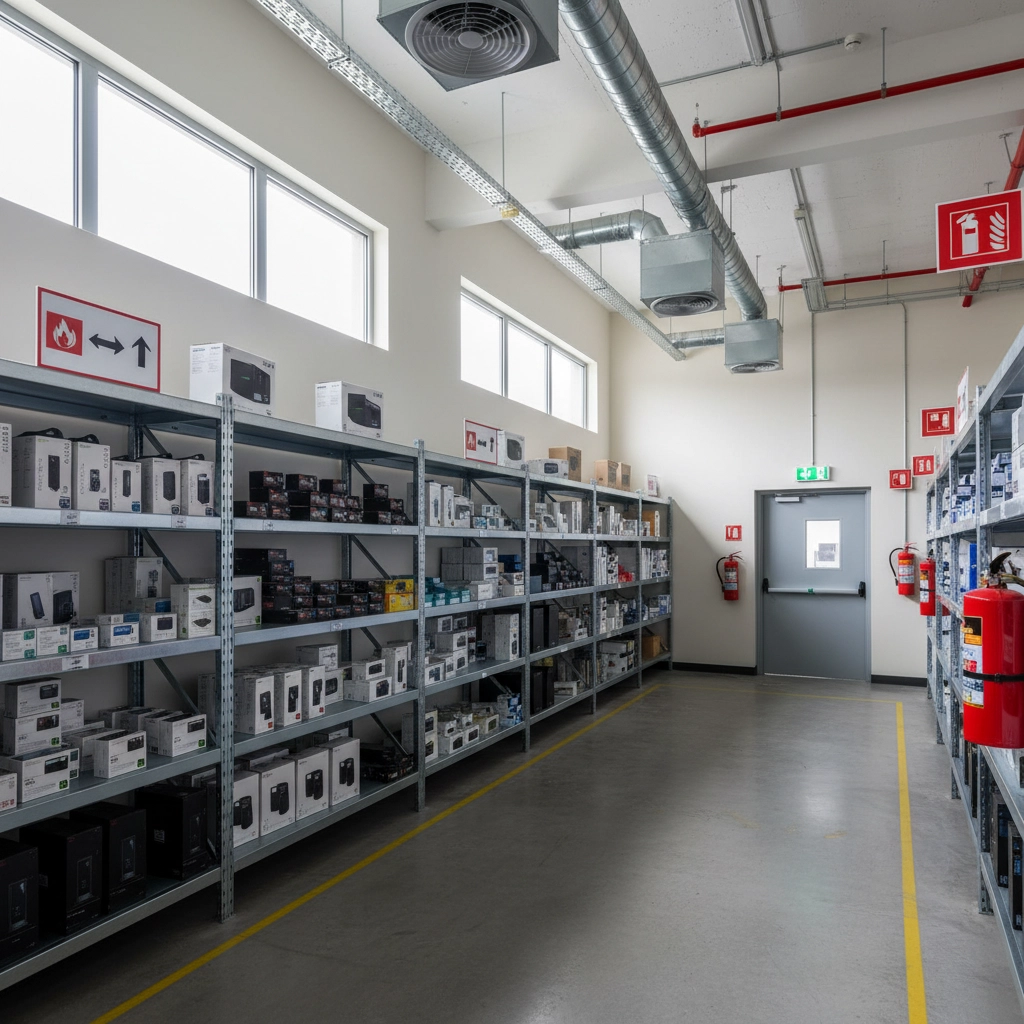
Keep fire extinguishers accessible near storage areas, ensure good ventilation, and never store items in areas where they could block emergency exits or fire safety equipment.
Making Collection Day Smooth
Proper WEEE storage isn’t just about compliance: it’s about making collection as straightforward as possible. When your waste is properly segregated, clearly labeled, and securely stored, collection teams can work efficiently and safely.
This means:
- Faster collection times
- Lower risk of additional charges for sorting
- Better relationships with your waste contractors
- Reduced likelihood of collection delays or rejections
For businesses in Northamptonshire looking for reliable electronics disposal near me, proper storage preparation makes all the difference to service quality.
Documentation and Compliance Made Simple
Keep clear records of what you’re storing and when it gets collected. For non-hazardous electrical waste, you’ll need waste transfer notes. Hazardous components require consignment notes with more detailed tracking.
Set up a simple system to track:
- What types of waste you generate
- Storage dates and locations
- Collection dates and contractors
- Any incidents or problems
This documentation proves compliance and helps you identify patterns that might inform better storage strategies.
Getting Professional Help
While these guidelines cover the basics, every business situation is different. The volume and types of WEEE you generate, your storage space limitations, and your collection frequency all affect the best approach for your specific needs.
If you’re unsure about any aspect of WEEE storage or need advice on setting up compliant systems, don’t hesitate to get professional guidance. Contact our team for specific advice on your storage requirements and collection scheduling.
Remember, getting WEEE storage right from the start saves time, money, and stress down the line. It’s an investment in smoother operations and peace of mind that you’re meeting all your environmental responsibilities.
Proper WEEE storage doesn’t have to be complicated, but it does need to be done right. Follow these do’s and don’ts, and you’ll have a system that works for your business, keeps you compliant, and makes collection day a breeze.